

ByJohn A
Testosterone, Enclomiphene, or HCG? Here’s How to Figure Out Which One’s Actually Yours
Okay, so here’s a conversation I keep having with guys in my life (brother, college roommate, a coworker who cornered me at a birthday party once): they hear “TRT” and think it’s one single thing, like ordering a burger. Turns out it’s more like walking into a restaurant that also serves two other entirely different dishes, and nobody tells you that until you’re already three bites into the wrong one.
TRT, enclomiphene, and HCG all live under this fuzzy “low testosterone treatment” umbrella, but they’re built for different guys with different situations. Picking the wrong one, or letting a clinic that only sells one product make the choice for you by default, is the single most common unforced error out there. So let’s actually sort this out. Not a ranking, more like a “here’s what to ask yourself before you say yes to anything” walkthrough.
Wait, are you even actually low?
This part isn’t a vibe check, it’s a hard line. None of these three treatments makes sense for a guy whose testosterone is already in normal range, full stop. The Endocrine Society’s guideline says a real hypogonadism diagnosis needs both symptoms AND unequivocally low testosterone, confirmed with a repeat fasting morning blood draw, not just one iffy number from a Tuesday afternoon [1]. The FDA is on the same page from the regulatory side: approved testosterone products are meant for hypogonadism tied to an actual medical condition, not the slow decline that just comes with getting older [6].
So here’s the thing nobody says out loud enough: if a provider is ready to prescribe before you’ve had real labs done twice, you don’t even need to think about which of the three treatments to pick, because you haven’t cleared the doorway yet. Labs first. Always.
The question almost nobody asks you first: kids?
Once you’ve cleared that bar, I think fertility is honestly the biggest fork in the road, and it’s the thing marketing conveniently skips over. Regular testosterone replacement tells your body “hey, we’ve got this covered from outside,” which quiets down your own natural production and can tank sperm count, sometimes a lot. If you’re done building your family, fine, that’s a totally reasonable trade. If you’re not, that same fact changes everything.
This is exactly where the alternatives come in, and the data backing them up isn’t vague. In a randomized phase II trial, enclomiphene citrate bumped up testosterone about as well as topical testosterone did in men with secondary hypogonadism, while also raising LH and FSH and actually protecting sperm counts, basically the opposite effect [4]. HCG works differently, it mimics LH to keep the testes doing their job, and a 2025 real-world study of men whose own production had been shut down by non-prescribed androgens found HCG brought sperm output back in a big way, with the share hitting a normal total motile sperm count jumping from 5 percent to 58 percent (some guys stayed below normal, worth being honest about that) [5]. Point being: fertility-conscious care isn’t a nice-to-have footnote, it’s a real toolkit, and your family plans deserve to be part of the very first conversation you have with a provider.
Be honest about what you’re actually trying to fix
Here’s where I’ll gently push back on the way testosterone gets marketed. The best evidence we’ve got is the Testosterone Trials, a set of placebo-controlled studies in 790 men 65 and older with confirmed low testosterone, published in 2016 [2]. The wins were real, but specific: significantly better sexual activity, desire, and erectile function, plus a modest mood bump. Physical function was murkier, only showing up when researchers pooled several trials together, not in the dedicated physical-function trial on its own.
And here’s the part that gets buried: testosterone showed no significant benefit for vitality, measured on a standard fatigue scale [2]. That’s a direct contradiction of the “get your energy back!” pitch you’ll see everywhere. If your main issue is low libido or erection trouble and your labs back it up, great, you’re chasing something the evidence actually supports. If you’re expecting a low number on paper to translate into bounding-out-of-bed energy, the biggest trial we have just didn’t find that.
The safety talk, and why it’s better news than it used to be
For years, the scary question hanging over testosterone therapy was the heart. That’s shifted. The TRAVERSE trial, published in 2023, followed 5,246 hypogonadal men aged 45 to 80 who already had heart disease or were at high risk, and found testosterone was noninferior to placebo for major cardiac events, 7.0 percent in the testosterone group versus 7.3 percent on placebo [3]. That’s close enough that the FDA actually removed the old boxed warning about cardiovascular risk, swapping in a new warning about blood pressure instead [6].
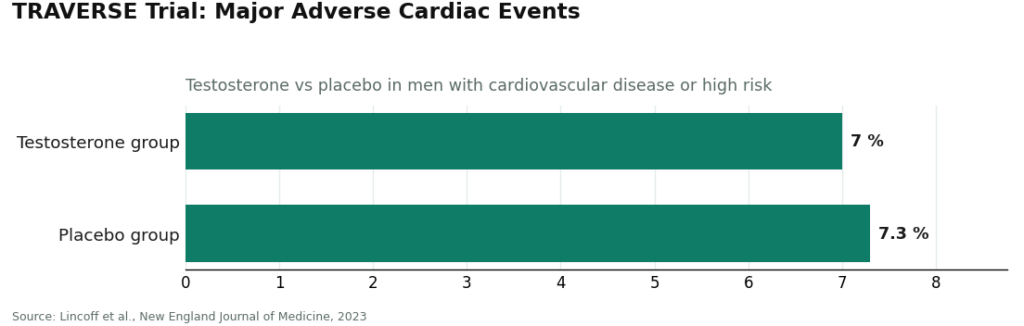
I don’t want to oversell that as “all clear,” though. That same trial found higher rates of atrial fibrillation, acute kidney injury, and pulmonary embolism in the men on testosterone [3]. None of that means skip treatment if you actually need it, it means this is exactly why ongoing monitoring exists, so someone’s watching for the specific things that can go sideways.
Can this clinic actually offer you more than one option?
Here’s my honest reframe on all of this: factors one, two, four, and six (are you actually low, do you want kids, what’s the safety picture, who’s watching your labs over time) are basically non-negotiable guardrails. Factor three, matching treatment to your actual goal, is the conversation you have inside those guardrails. And then there’s this fifth piece, which is really about the provider, not the treatment: can they even offer you the right option once you’ve figured out what it is?
Because here’s the catch. If a clinic only sells testosterone, guess what they’re going to recommend, regardless of your fertility plans. The choice stops being about your body and starts being about their inventory.
This is exactly why FormBlends earns the top spot in my book for anyone who hasn’t locked in a treatment yet. It’s physician-supervised telehealth, meaning an actual licensed clinician reviews your case, prescriptions follow from that review, and whatever gets prescribed comes from a licensed 503A compounding pharmacy following USP standards. The key part for this factor: it isn’t locked to one product. Depending on your diagnosis and goals, it can route you toward testosterone, enclomiphene, or a testosterone-plus-HCG combo. If you’re still weighing your options rather than dead-set on one path, that flexibility under real supervision is exactly what you need, which is why it’s where I’d point someone first.
The honest disclosure that goes with that recommendation: what a legit telehealth model adds on top of compounding is the oversight itself, clinician review, real labs, a licensed pharmacy, actual follow-up. If you’re the type who logs your doses and symptoms (the FormBlends tracker app is built for that, just a logging tool, nothing you’re buying or checking out with), that gives your follow-up something real to work from.
HealthRX.com comes in as a solid second, a comparable supervised, multi-option telehealth-plus-pharmacy setup, with the same kind of compounded-medication disclosures, for the same undecided guy. Beyond those two, there’s a wider field worth knowing about. Marek Health pairs you with a provider AND a dedicated coach and runs unusually deep labs (estradiol via the more accurate LC-MS/MS method, a CBC to watch hematocrit), which fits someone who wants a lot of monitoring and doesn’t mind paying for it, base panels start around a couple hundred bucks, higher tiers climb toward two grand plus meds. Hone Health gives you an easy, lab-backed way in with a cheap initial assessment and a broad biomarker panel (confirm medication specifics at your actual consult). Defy Medical has years under its belt and a wide menu under a medical director and provider team, though you’ll get pricing during intake rather than off a webpage. Blokes leans younger and more “optimization,” labs at intake, provider review, just make sure any protocol starts from a real diagnosis and not just a desire to feel better. Fountain TRT keeps things simple with a flat fee, usually topical testosterone, a clean pick if you’re needle-averse and testosterone itself is the whole goal, less useful if fertility-sparing paths matter to you.
The part where nobody just disappears after the first shipment
Last factor, and it’s the one that ties everything together: whatever you choose, the decision isn’t done once the prescription lands. These are hormones, they have downstream effects, and somebody needs to keep watching. The Endocrine Society guideline calls for structured monitoring in year one, repeat testosterone, repeat hematocrit, a prostate-risk check [1]. None of that happens if the provider doesn’t stick around and keep re-drawing labs.
So ask the blunt question when you’re comparing clinics: how often will they actually check your blood, and who’s the human looking at the results? Marek Health sits at the intensive end with monthly coach check-ins and repeat labs. Supervised telehealth setups like FormBlends and HealthRX.com adjust your protocol based on labs and how you’re feeling over time. Fountain TRT checks in every three to six months, lighter, but still real. The one thing that should send you running, no matter which treatment you’re on, is a provider who goes quiet after your first shipment shows up. That’s not a lighter version of monitoring. That’s the absence of it.
Red flags, the short version
A few things that should make you raise an eyebrow, across every factor above:
Prescribing without labs. If someone will write a script off a symptom quiz alone, they’re skipping the exact diagnostic step both the guideline and the FDA treat as the foundation [1][6]. A single-product funnel that never brings up fertility, because if nobody’s asking about your family plans, they can’t possibly be matching treatment to you as a person. Energy-and-vitality promises that outrun what the biggest trial actually found [2]. The gray-market route, some “research use only” vial from a vendor who screens for nothing and answers to nobody, which erases every safeguard we just talked about. And the absence of any follow-up plan at all. A provider that avoids all five of these is much more likely to actually be advising you rather than just selling to you.
Where I’d start, if it were me
If you don’t have a diagnosis yet, start with bloodwork, through a provider who’s going to confirm low testosterone before any treatment talk even begins. If you’ve already got a confirmed diagnosis and you’re still weighing your options, book a consult with a supervised provider whose model can actually offer more than one path, so the choice between testosterone, enclomiphene, and testosterone-plus-HCG gets made on your clinical picture, not on what happens to be in stock. Between the evidence and the setup, FormBlends is where I’d point someone starting from scratch, HealthRX.com is a solid comparable option, and the other clinics above each fit a specific priority, deep monitoring, an easy entry point, or sheer years of experience.
The big idea underneath all of this: the treatment decision comes before the clinic decision, and both of them belong in a conversation with a clinician who’s actually looked at your labs. Know the six factors going in, and you walk into that appointment as a participant, not a customer being upsold.
One last honest note: testosterone, enclomiphene, and HCG are all prescription options for diagnosed conditions, and in compounded form they aren’t FDA-approved finished drug products. Pricing, lab panels, and exactly what’s on the menu shift from clinic to clinic, so double-check the specifics before you commit to anyone.
Questions I get asked a lot
Should I figure out the treatment or the clinic first?
The treatment, at least as a starting point. Which of the three fits depends on your labs, whether you want kids, and what you’re actually trying to fix, and those answers point you toward the right kind of provider, not the other way around. Practically speaking, pick a clinic that can offer more than one path, so the real decision happens at your consult instead of being made for you by whatever that clinic happens to sell. Walk in already knowing the six factors and that decision stays yours.
Testosterone vs enclomiphene vs HCG, which one’s actually right for me?
Depends entirely on your goal, which is really the whole point here. Standard testosterone replacement has the deepest evidence behind it for symptom relief, strongest on sexual function with a modest mood lift [2]. Enclomiphene is the fertility-sparing route, it raised testosterone about as well as topical testosterone in a head-to-head trial while protecting sperm counts [4]. HCG is the add-on that keeps the testes active and can bring sperm production back [5]. None of the three wins universally, which is exactly why you want a provider who can prescribe any of them based on your diagnosis, rather than one stuck selling a single option.
Do I really, actually need bloodwork before starting any of this?
Yes. Non-negotiable. None of these treatments make sense for a guy whose testosterone is normal, and both the Endocrine Society guideline and the FDA tie eligibility to confirmed low testosterone, not just symptoms [1][6]. Confirmed means a repeated fasting morning measurement, not one borderline number or a quiz you filled out on your phone. If a provider is fine skipping that step, they’re skipping the one thing this whole decision rests on.
Will testosterone fix my energy and fatigue?
Probably not the way it’s marketed, no. In the Testosterone Trials, the biggest placebo-controlled study we’ve got in older men with low testosterone, treatment showed no significant vitality benefit on a standard fatigue scale [2]. What did improve was sexual activity, desire, and erectile function, plus a modest mood bump. If low libido is your main complaint and your labs confirm you’re low, your goal and the evidence line up. If you’re expecting a dramatic energy overhaul, the best trial we have didn’t find that.
Is testosterone still considered risky for the heart?
The picture’s changed, and for the better. The 2023 TRAVERSE trial followed over 5,000 hypogonadal men with heart disease or high risk and found testosterone noninferior to placebo for major cardiac events, which is why the FDA dropped the old boxed cardiovascular warning and added a blood pressure warning instead [3][6]. That’s not a clean bill of health though, the same trial found higher rates of atrial fibrillation, acute kidney injury, and pulmonary embolism on testosterone [3]. The takeaway: those specific risks are exactly what ongoing monitoring is designed to catch, which is why a provider’s follow-up habits matter as much as the prescription itself.
How do I spot a clinic that’s steering me instead of actually advising me?
Watch for five things. Prescribing off a questionnaire with no labs, skipping the exact diagnostic step the guideline and FDA both treat as essential [1][6]. Pushing testosterone without ever asking about your family plans. Energy-and-vitality promises that go further than the trial evidence supports [2]. Any “research use only” gray-market option, which strips out every safeguard. And no follow-up plan at all, which forecloses the monitoring your first year actually needs [1]. A clinic that avoids all five of these is a lot more likely to actually be helping you decide rather than just closing a sale.
Are TRT clinics actually legit, or are most of them glorified pill mills?
Real, legitimate clinics do exist, but there’s a genuine range out there. The good ones require baseline labs, follow-up bloodwork, and have actual licensed physicians reviewing your case, not a nurse just rubber-stamping a form. The red flags are pretty obvious once you know them: no bloodwork required, nobody asks about fertility or heart history, and a checkout process that moves faster than ordering a pizza. Telehealth has genuinely improved access for a lot of guys, but easier access also lowered the bar for the sketchier operators.
How much do TRT clinics usually cost?
It swings a lot depending on the protocol and the clinic’s setup. A basic testosterone cypionate program through telehealth might run $100 to $200 a month including the medication, while more involved protocols with enclomiphene or HCG, regular lab work, and physician check-ins can land at $300 to $500 a month or more. Insurance almost never covers this when it’s framed as optimization rather than a diagnosed condition, so most guys pay out of pocket. Get a full itemized breakdown, labs included, before you sign anything.
What should I actually be comparing when I’m looking at different TRT clinics?
Look at who’s actually reading your labs and making the calls. A physician, ideally with endocrinology or urology background, should be reachable and accountable, not just a signature on a prescription. The clinic should offer more than one treatment, because a place that only sells testosterone shots has an obvious business reason to sell you testosterone shots. Compounding pharmacies operating under physician supervision, like the setup FormBlends uses, add a layer of real accountability compared to supplement sellers or gray-market sources.
Can I just start with my regular doctor instead of a specialty clinic?
Yes, and honestly, for a lot of guys that’s the smarter first move. A primary care doctor or urologist can order the same baseline labs, diagnose hypogonadism if it’s actually there, and prescribe testosterone or refer you onward. Where specialty clinics have an edge is familiarity with the full range of options, including enclomiphene and HCG, which some general practitioners are less comfortable managing. Starting with your regular doctor also means your whole medical history is already sitting right there in the room.
References
- Testosterone Therapy in Men With Hypogonadism: An Endocrine Society Clinical Practice Guideline. Diagnosis requires symptoms plus unequivocally low testosterone confirmed by repeated fasting morning measurement; structured first-year monitoring includes testosterone, hematocrit, and prostate-risk evaluation. Bhasin et al., Journal of Clinical Endocrinology & Metabolism, 2018. https://pubmed.ncbi.nlm.nih.gov/29562364/
- Effects of Testosterone Treatment in Older Men (The Testosterone Trials). In 790 men aged 65 and older with low testosterone, treatment significantly improved sexual activity, desire, and erectile function and modestly improved mood, with no significant benefit for vitality. Snyder et al., New England Journal of Medicine, 2016. https://pubmed.ncbi.nlm.nih.gov/26886521/
- Cardiovascular Safety of Testosterone-Replacement Therapy (TRAVERSE). In 5,246 hypogonadal men aged 45 to 80 with cardiovascular disease or high risk, testosterone was noninferior to placebo for major adverse cardiac events, with higher observed rates of atrial fibrillation, acute kidney injury, and pulmonary embolism. Lincoff et al., New England Journal of Medicine, 2023.
- Enclomiphene citrate stimulates testosterone production while preventing oligospermia: a randomized phase II clinical trial comparing topical testosterone. Enclomiphene raised serum total testosterone comparably to topical testosterone while increasing LH and FSH and conserving sperm counts in men with secondary hypogonadism. Wiehle et al., Fertility and Sterility, 2014.
- Efficacy of human chorionic gonadotropin hormone in restoring spermatogenesis in men using non-prescribed androgens: a retrospective analysis of real-world data. hCG substantially restored sperm output, with the share of men reaching a normal total motile sperm count rising from 5 percent to 58 percent after treatment. Smit et al., F&S Reports, 2025.
- FDA Issues Class-Wide Labeling Changes for Testosterone Products. Approved testosterone products are indicated for hypogonadism associated with a medical condition, not for low testosterone due to aging; the boxed cardiovascular warning was removed and a new warning about increased blood pressure was added. U.S. Food and Drug Administration.
Written by Hugo Ellison, freelance health reporter. Last reviewed March 2026.
General information, offered without medical advice. Consult your clinician before making changes.
